Household economics
The most expensive body part in Switzerland
A life in Swiss teeth, from the first one at six months to the last one at ninety-nine.
smileeasy Magazine. Published 20 August 2026. Sources verified August 2026. 9 minutes.
Switzerland insures almost every part of your body. Teeth are the exception.
Break a leg, need heart surgery or spend four days in hospital, and basic insurance covers most of the cost. Need a filling, a crown or an implant, and the bill is yours. The large majority of what is spent in Swiss dental practices comes directly out of the patient's pocket.
That is a market of roughly four billion francs a year with no insurer standing in the middle of it. It is also, for the same reason, one of the most revealing datasets in Swiss health. When nobody else is paying, what people spend, what they postpone and what they never start shows up in their mouths.
The Federal Statistical Office has measured this every ten years since 2002. The results say as much about Switzerland as they do about Swiss teeth.
What follows is one Swiss mouth across a hundred years.
Ages 0 to 12: the good news, and it is genuinely good
Swiss children have remarkably healthy teeth. In the canton of Zurich, where the same survey has run since 1964, decay in fourteen-year-olds fell by around ninety percent over four and a half decades, from an average of 12.50 damaged teeth to 1.31. It is one of the most complete public health wins the country has ever recorded. Fluoride explains roughly half of it. The rest the researchers could not account for.
For parents the practical part is short. Use a toothpaste with at least 1000 ppm fluoride, because below that the evidence for preventing decay gets thin. After brushing, spit and do not rinse. Rinsing washes away most of the fluoride you just applied.
Nothing in this section costs money. That is worth noticing, because almost nothing in the next eighty years is free.
Ages 13 to 25: the decade where the gap opens
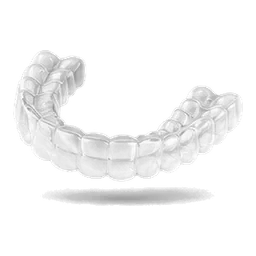
Braces have become close to normal. More than half of Swiss 15- to 39-year-olds have worn them, against 35 percent of the population as a whole.
Normal for whom, though. Among Swiss adults with a tertiary degree, 41.5 percent have had orthodontic treatment. Among those with no post-compulsory education, 7.9 percent have.
The more uncomfortable finding is the direction of travel. Between 2002 and 2022, orthodontic treatment among the tertiary-educated rose from 26 to 41.5 percent. Among those with compulsory schooling only, it moved from 6.4 to 7.9 percent, a change the Federal Statistical Office does not consider statistically significant. The gap did not narrow across twenty years of Swiss prosperity. It widened, from around twenty percentage points to around thirty-four.
This is the one number in the dataset that should worry people, and it is worth being precise about why. Orthodontics is not cosmetic dentistry. A crooked smile is a look. A bad bite is a mechanical problem that can grind enamel down for four decades and then present, at fifty-five, as worn teeth, cracked cusps and a treatment plan with five figures on it. Cases graded as minor at twelve are a familiar sight in adult practice thirty years later, priced very differently.
At the same time the pressure to have straight teeth has changed shape. Teeth used to be judged across a table. Now they are judged in selfies, video calls and dating profiles. A straight smile has become part of how people present themselves, which pulls orthodontics somewhere between healthcare and aesthetics and makes it easier for a payer to decline.
And while this generation straightens its teeth better than any before it, it has found a new way to damage them. A meta-analysis of twenty-two studies puts erosive tooth wear at roughly 30 percent of adolescents. Sports drinks, energy drinks, kombucha and fruit juice are, in acid terms, close relatives of cola.
Ages 26 to 39: the hygienist quietly took over
Something has happened to routine dental care in Switzerland that nobody announced.
Between 2002 and 2022, the share of the population seeing a dentist in a given year fell from 62 to 56 percent. Over the same period, the share seeing a dental hygienist rose from 37 to 58 percent. Forty percent now see both. Twenty-six percent see neither.
Routine care has moved to the hygienist. Clinically that makes sense. By this age the main threat is no longer decay but gum disease, and severe periodontitis climbs sharply from the thirties onwards, usually without pain and often without any symptom the patient would notice.
Economically it makes sense too, and that part is less discussed. The hygienist is the cheaper hour. In a system where the patient pays, care migrates towards the cheaper hour on its own.
There is a second finding here that most people find surprising. The standard six-month check-up is much less evidence-based than it sounds. The INTERVAL trial randomised 2,372 adults across 51 UK practices to six-month, risk-based or, where appropriate, 24-month recalls. After four years, six-month recall produced no better oral-health outcomes than risk-based recall. A Cochrane review reached the same place, finding little to no difference across several key outcomes.
That is not an argument for staying away. It is an argument that the interval should follow your risk rather than the calendar, and that "every six months" is a convention, not a finding.
The same pragmatism applies at home. Powered toothbrushes do somewhat better than manual ones. Flossing probably helps with plaque and gum inflammation, but the evidence is considerably weaker than its reputation. Half the Swiss population flosses, and that number has not moved in twenty years.
Ages 40 to 64: the bill arrives
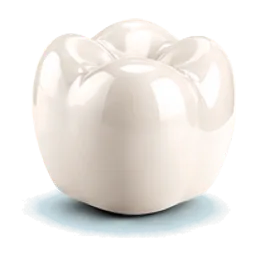
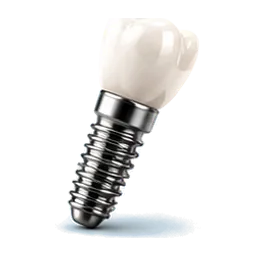
By middle age, dentistry gets expensive. A crown can easily cost CHF 1’500 or more. An implant with its crown runs into several thousand francs. A root canal commonly costs around CHF 700 to 1’800. These are indicative Swiss market figures and they move with the treatment plan, the materials and the practice. Unlike almost every other serious healthcare cost in Switzerland, they are paid out of pocket.
There is a detail in how those prices are built that most patients never see. Swiss dental fees are calculated by multiplying a fixed number of tax points per procedure by a tax point value. For social insurance that value is CHF 1.00. For private patients it can go up to CHF 1.70. The same procedure, performed identically, can legally carry a seventy percent spread depending on which multiplier is applied. Switzerland publishes a tariff for teeth and then leaves the final number open.
Treatment itself has changed as much as the price. Among 40- to 64-year-olds, the share with a dental implant almost tripled between 2002 and 2022, from 5.5 to 14.6 percent.
And the cost changes behaviour, though how much depends entirely on what you count. In 2023, around 4.5 percent of Swiss adults reported going without dental treatment they needed for financial reasons. The Commonwealth Fund's International Health Policy Survey, using a broader definition that includes treatment and check-ups not necessarily classed as essential, put the figure at 26.4 percent in 2020.
Both numbers are real, and the space between them is the interesting part. Roughly one in twenty Swiss adults skips treatment a dentist told them they needed. Roughly one in four skips dental care more broadly, including the appointment where somebody would have told them. Neither figure is spread evenly across the population, in a country where the treatment itself is identical.
Waiting has a price list of its own. A cavity becomes a root canal, a root canal becomes a crown, and a crown eventually becomes an implant. Each step costs several times the last one. The cheapest possible version of Swiss dentistry is the early version, which is precisely the version that people short of money are most likely to skip.
Ages 65 to 99: keeping your own teeth
This is the clearest success story in the data, and it deserves to be said plainly.
In 2002, 58 percent of Swiss over 65 wore a denture or partial denture. By 2022 that figure had fallen to 26 percent. Implants went the other way, from 6 percent to 27 percent in the same group. Across the whole population, the share with a complete natural set of teeth rose from 33 to 44 percent in twenty years. Dental hygiene visits among the over-65s more than doubled, from 30 to 65 percent.
A generation that expected to lose its teeth largely did not.
What arrives instead is the medicine cabinet. Antidepressants and heart medication, diabetes, high cholesterol, chronic lung disease and a history of heart attack or stroke all travel with worse self-rated oral health.
Some of that is shared circumstance. Some of it is more direct: a number of these conditions and the drugs that treat them reduce saliva, and saliva is one of the main things protecting teeth. A dry mouth at seventy-five undoes a lot of what fluoride did at seven.
Which means that by this age the dentist belongs inside general health management rather than beside it. Your dentist should know your medication list. Very few do.
The pattern: what the numbers say about inequality
Put the decades together and the same shape appears at every age.
Swiss adults with a tertiary education are more likely to floss, more likely to use an electric toothbrush, more likely to see a hygienist, and far more likely to have had orthodontic treatment. They intervene earlier, and earlier is cheaper.
It ends up visible in the teeth themselves. Among 25- to 64-year-olds with tertiary education, 56 percent still have a complete natural set of teeth. Among those with no post-compulsory education, 25 percent do. The Federal Statistical Office notes that this gradient has been stable since 2002.
Stable is the word to sit with. Across two decades in which Switzerland got richer, healthier and better at dentistry, the gap between the best and worst Swiss mouths did not close at all. In orthodontics it opened further.
This is the part that behaviour cannot explain on its own. Brushing is free. Flossing is nearly free. What separates a 56 percent from a 25 percent is not mostly effort. It is which treatments you could authorise for yourself at the moment they were still small.
In a system where the patient pays directly, every deferred decision compounds. That is the real finding, and it also points at the only lever an individual actually holds. The dental price in front of you is not a fixed property of the treatment. It is a number produced by a tariff, a multiplier and a location, and all three are variables. Most Swiss patients have never been told that any of them can be questioned.
Teeth are the most expensive part of the Swiss body. They are also the part where the price was never really fixed.
Sources
- Federal Statistical Office, Kosten und Finanzierung des Gesundheitswesens. Expenditure on dental practices and clinics, about CHF 3.9 billion in 2023, and dental as a share of health spending.
- Federal Statistical Office, Mund- und Zahngesundheit in der Schweiz, 2002 bis 2022 (BFS 1734-2200, April 2025), based on the Swiss Health Survey 2022, 19,137 respondents to the written questionnaire. Complete natural dentition and the education gradient; dentist and hygiene visits; orthodontics by education; implants and dentures by age; flossing.
- Steiner, M., Menghini, G., Marthaler, T. M. and Imfeld, T., Kariesverlauf über 45 Jahre bei Zürcher Schülern, Schweizer Monatsschrift für Zahnmedizin 120: 1095–1104 (2010). Sixteen communities in the canton of Zurich, same standardised method since 1963/64. DMFT in fourteen-year-olds falling from 12.50 in 1964 to 1.31 in 2009, a reduction of ninety percent. The authors attribute roughly half of the decline to fluorides and state that the remainder is unexplained. open access
- Salas, M. M. S. et al., Estimated prevalence of erosive tooth wear in permanent teeth of children and adolescents, Journal of Dentistry (2015). Systematic review and meta-analysis of 22 studies; 30.4 percent among 8- to 19-year-olds. Salas MMS et al., J Dent 2015;43(1):42-50
- Clarkson, J. E. et al., the INTERVAL Dental Recalls randomised controlled trial. 2,372 adults across 51 UK practices assigned to six-month, risk-based or 24-month recall; no better oral-health outcomes from six-month recall than risk-based recall after four years. Clarkson JE et al., British Dental Journal 230(4):236-243
- Fee, P. A. et al., Recall intervals for oral health in primary care patients, Cochrane Database of Systematic Reviews. Little to no difference across several key outcomes. Fee PA et al., Cochrane Database Syst Rev 2020;10:CD004346
- Comparis, Helsana and SSO published price guidance. Indicative Swiss market ranges for crowns, implants and root canal treatment.
- SSO tariff. Tax point values of CHF 1.00 for social insurance and up to CHF 1.70 for private patients.
- Forgone care: BFS/SILC 2023, population aged 16 and over, treatment reported as necessary (4.5 percent); Commonwealth Fund International Health Policy Survey 2020, broader definition, as reported by SWI swissinfo (26.4 percent).
Rules and registers change. Figures and dates were current in August 2026. This article explains how the system works. It is not medical advice. Which treatment is right for you is a question for a dentist who has examined you.
Also in the magazine
On smileeasy
Treatments in this article